
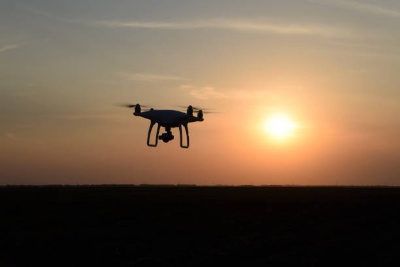
Drone Technology Course
Gain the skills you need to advance your career. This course offers hands-on learning, expert guidance, and real-world applications designed to help you grow.






Course Overview
| Course Title | Drone Technology Course |
| Organization | Tech For Development (T4D) |
| Venue | Tech For Development (T4D) Training Center along Tala Road, Runda, Nairobi |
| Duration | 5 days |
| Target Industries |
|
| Target Job Roles |
|
| Course Fees (Face-to-Face) | USD 1,100/KES 75,000 (Exclusive of VAT) |
| Course Fees (Virtual) | USD 1,000/KES 70,000 (Exclusive of VAT) |
| Training Modes | Virtual and face-to-face training |
| Payment | Payment should be made to the Tech For Development (T4D) bank account on or before the start of the course |
| Accreditation | Tech For Development Certificate of Course Completion |
There are many varied uses for drones, and the capacities and capabilities they provide are being expanded all the time. Typically, they are used to reduce the risk involved in hazardous activities, to access areas or structures that are otherwise hard to reach or to enhance the possibilities of creative endeavors. In this course the participants will learn drone’s components and their work, legalities and risks and applications in commerce, exploration, horticulture, agriculture and more.
Duration
5 Days
Who Should Attend:
Farmers, horticulturists, planners, builders, film makers, marketing professionals, surveyors, environmental managers, land and resource managers, researchers, and others.
Course Objectives
At the end of this T4D training course, you will learn:
- Their components and how they work
- Legalities, risks
- Applications in commerce, exploration, horticulture, agriculture and more
Course Modules
Course Outline
Module 1: Scope and Nature of Drone Technology
- What is a Drone?
- History of Drones
- Types of Drones
- Multi rotor, Single rotor, Fixed wing drones
- Fixed wing hybrid, airship and other drone types
- Connectivity - radio frequency, wi-fi, LTE
- Purpose of Drones
- Remote sensing, aerial surveillance, video applications
- Other applications - disaster relief, construction, geo survey, recreation, military, aquatic and space applications.
Module 2: Drone Features and Operation
- Main Features of Drones
- Camera and media storage
- Flight time and speed o Hover accuracy
- Components - battery, gyroscope, accelerometer, altimeter, sensors, antenna
- Controllers - flight controller, electronic speed controller, gps
- Camera
- Payload
- How to build a Drone in 6 steps
- Operation of Drones - vertical motion, rotating
Module 3: Benefits, Risks and Legalities
- Ethical Concerns - individual rights, data protection, accountability of autonomous
- Legal Considerations
- Safety
- Air space
- Environmental law
- Spying o Stalking
- Data collection
- Data breach
- Smuggling
- Drones as weapons
- Cyberweapons
Module 4: Environmental Applications
- Land Management
- Reforestation
- Sustainable Agriculture and Crop Monitoring
- Monitoring & Inspection of Renewable Energy Sources, Pipelines, and Oil Rigs
- Wildlife Conservation - detecting poachers, collecting samples
- Transport & Delivery
Module 5: Exploratory and Discovery Applications
- Drones in Exploration
- Oceanic Exploration
- Space Exploration
- Drones in Mining Applications
- Sampling and data collection
- Volumetrics and LiDar
- Stability and safety monitoring
- Security monitoring
Module 6: Retail and Service Applications
- Drones in Real Estate
- Photography
- Drones for Online Services
- Drones in Security
- Drones in Behavioural Economics
Module 7: Agronomic and Horticulture Applications
- Horticulture
- Agronomy
- Viticulture
- Livestock
- Precision Agriculture
- Applications
- Marketing and sales
- Surveying
- Crop monitoring
- Pesticide and fertiliser application
- Crop inventory and insurance
- Monitoring livestock
- Asset management
- Challenges of using drones in Agriculture: Types of aircraft, Sensors, BIG data, Flight regulations, Liability
Module 8: Construction and Industry Applications
- Construction Drones
- Mapping and Land Surveys
- Data and Scheduling
- Track and Inventory Equipment
- Progress Reports and Collaboration
- Safety and Inspections
- Security and Surveillance
- Limitations of Drones in Construction
Module 9: Telecommunication Applications
- Drone Technology in Telecommunications
- Inspections and Asset Management
- Line of sight testing
- Temporary networks and Airborne relays
- Network measurement
- Internet of things connectivity
- Data provision and processing
- Flight paths and corridors
- Unmanned aircraft systems
- Tethered systems
Course Administration
Methodology
Instructor-led sessions use a blended learning approach combining presentations, guided practical exercises, web-based tutorials, and group work, delivered by seasoned industry experts. All facilitation and course materials are in English, so participants should be reasonably proficient in the language.
Accreditation
Upon successful completion of this training, participants will be issued a Tech For Development Certificate of Course Completion certified by the National Industrial Training Authority (NITA).
Training Venue
The training will be held at the Tech For Development Training Centre. The course fee covers the course tuition, training materials, two break refreshments, and lunch. All participants will additionally cater to their travel expenses, visa application, insurance, and other personal expenses.
Accommodation & Airport Transfer
Arranged upon request.For reservations contact the Training Officer:
Email: [email protected]
Phone: (+254) 790 824 179
Tailor-Made
This training can also be customized to suit the needs of your institution upon request. You can have it delivered in our T4D Training Centre or at a convenient location.
Payment
Payment should be transferred to the T4D account through a bank on or before the start of the course. Send proof of payment to [email protected].
Related Courses



Course Reviews
Based on 0 participant feedback
No reviews yet for this course. Be the first to share your experience!
Write a Course Review
Please share your honest feedback below.