

Buying new software is easy; getting your team to actually use it is the real challenge. Every year, organizations waste millions of dollars on cutting-edge tools that end up becoming expensive “shelfware.” In this guide, you will learn why true technology adoption drives business success, how to measure real usage over basic purchase metrics, and actionable strategies to ensure your team actually embraces new digital tools.
The $100 Billion Problem: Acquisition vs. Adoption
Many executives confuse buying technology with digital transformation.
Purchasing software (acquisition) only grants you access to potential capability. Integrating that software into daily workflows until it becomes second nature (adoption) is what creates actual value.
- Technology Acquisition: The procurement, licensing, and technical deployment of hardware or software.
- Technology Adoption: The sustained, optimal usage of technology by end-users to achieve business goals.
When you focus solely on acquisition, you create a gap between what your tech can do and what your team actually does with it.
Comparing the Impact: Purchase vs. Usage
The distinction between acquiring a platform and successfully adopting it impacts every core business metric.
| Metric / Dimension | Technology Acquisition | Technology Adoption |
| Primary Goal | Sign contracts & deploy software | Drive daily active usage & habits |
| Success Indicator | On-time, on-budget delivery | Measurable gain in productivity/ROI |
| Primary Focus | Features, specs, and vendor pricing | User experience, training, & workflow |
| Financial Impact | Immediate Capital/Operational Expense | Long-term revenue growth & cost savings |
| Risk Factor | Paying for unused licenses (“Shelfware”) | Employee resistance & slow change management |
3 Reasons Why Adoption Drives True ROI
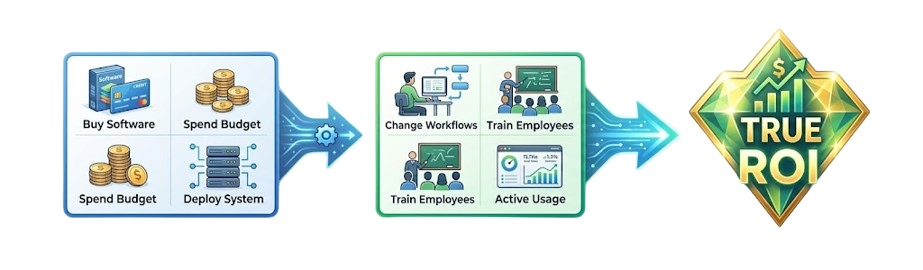
1. Unused Features Yield Zero Returns
A feature-rich CRM or AI analytics suite provides no value if your employees continue tracking leads in scattered spreadsheets. ROI is generated by usage, not ownership.
2. High Churn and Friction Hurt Morale
Forcing complex software onto teams without proper onboarding leads to frustration. When tools hinder daily output rather than helping, employee burnout increases and operational speed drops.
3. Subscription Models Reward Continuous Value
With modern SaaS platforms, paying a subscription fee without active adoption means continuous capital drain. Maximized license utilization ensures you get full performance out of every dollar spent.
How to Shift Your Strategy from Buying to Adopting
To ensure your next tech investment yields tangible results, follow this 4-step adoption framework:
- Involve End-Users Early: Include team leaders and daily users in the evaluation phase, not just top-level decision-makers.
- Invest in Continuous Enablement: Move away from one-off onboarding sessions. Provide ongoing micro-learning resources, interactive walkthroughs, and peer coaching.
- Track Depth of Usage: Don’t just track logins. Monitor specific feature adoption, task completion rates, and workflow speeds.
- Iterate Based on Feedback: Periodically survey your team to identify friction points and adjust your internal processes accordingly.
Buying expensive software won’t transform your business, using it will.
Investing in top-tier platforms like Salesforce, HubSpot, or Zoho is only half the equation. Real ROI comes from user adoption, proper configuration, and knowing how to turn features into repeatable revenue.
Stop letting powerful tech sit idle. Build the hands-on expertise needed to drive adoption, automate pipelines, and scale operations with the CRM Mastery Course today.